
What? Nationwide Employment Locator
-
Before you commit to a time-consuming surveillance to figure out where
someone works, check this nationwide employment locator. The Federal
Election Comm...
Thursday, June 30, 2005
~ do not call - or else ~
I just knew it wouldn't be too long after the creation of the Do Not Call list before some commercial entities created a database of otherwise unavailable phone numbers. The Missouri Attorney General has added a mortgage company to its list of violators, from which the AG has collected $1.2 million.


~ find your way around the U.S. - locate government offices ~
Find all the corresponding counties and states for a city name. This site also has a searchable database by county name that returns a linkable list of the associated states. A search on the county name "Jefferson" lists 28 states that include this word in their county name (two for Louisiana).
State and government repositories of public records can be located through the comprehensive Public Records Research System at an annual fee of $119 for two users. This online database can be searched within each state by city or county, and further limited by state office, license or Federal Records Center. It provides location and hours of operation of the government office, fees for searching or for documents, indexing method and inclusive dates, and various ways to access the offices' services.
State and government repositories of public records can be located through the comprehensive Public Records Research System at an annual fee of $119 for two users. This online database can be searched within each state by city or county, and further limited by state office, license or Federal Records Center. It provides location and hours of operation of the government office, fees for searching or for documents, indexing method and inclusive dates, and various ways to access the offices' services.
Tuesday, June 28, 2005
~ is the connecticut criminal index flawed? ~
The inaccuracy of court index information has taken a new shape with the redacting of personal data and the posting of these indexes on the court websites. I previously reported on the apparent unintentional alteration of Sacramento County, California criminal index listings. We're familiar with the various identifiable limitations of the government sites: inclusive dates aren't listed and the information returned may be more limited than that at a commercial source. The current issue of Public Records Update, from BRB Publications reveals another troubling situation: the removal of cases from indexes without any notification. Here's the summary from BRB:
Many online researchers are aware of the Connecticut Judicial Department's website as an excellent free online source of CT Superior Court civil records (http://www.jud2.state.ct.us/Civil_Inquiry). However, many researchers may not be aware of periodic purges of the data that may jeopardize true due diligence searching. Although the webpage states that records can be posted as long as 10 years, many cases are only posted for one year. For example, cases closed by settlement, dismissal, withdrawal, and even stipulated judgments may be removed from the website within a year after disposition. Also, in March 2005, over half of the records were purged from the system (from 309,000 to 145,000 civil cases).
While the CT Judicial Branch website can be a useful tool for anyone interested in searching for judgments or pending cases, it can be a trap for the unwary who are looking for a full litigation history or background information. A special thanks to John Lach of Court PC of Connecticut Inc. for bringing this to our attention!
~ chicago crime database and map ~
Browse Chicago crimes. Plot all or specific crimes on a street or satellite map.
Sunday, June 26, 2005
~ only 4 days to save your PI butt ~
California PI's and those that rely on our work need to send letters to the California Assembly Judiciary Committee immediately, to stop the forward momentum of SB550, which will effectively put databrokers out of business. Email me if you don't have a sample letter. Include your PI license number, or work affiliation if you're not a PI.
~ will europe guide u.s. data restriction laws? ~
Europe has greater restrictions on access to personal data, which may guide the U.S. Congress in its endeavor to remove avenues of fraud for identity thieves. Read the article [subscription bypass: bugmenot.com; me_at_spamguard.com/junk]
~ an advanced search of the SSDI ~
Find more than enough search fields for the social security death index at Steve Morse's site.
~ this week in court ~
A smattering of bad court decisions.
Private university's crime log will remain secret
A private university in Georgia can continue to hide its police activities from the public after the state's highest court declined to review an intermediate appellate court decision that the open records law does not cover the school's campus
police.State Supreme Court limits public access to court records
The Minnesota Supreme Court has approved new rules that will restrict the public's ability to access court records online, and reduce the information now available in paper records.
Saturday, June 25, 2005
~ track local activity of individuals, companies and products ~
You may be using craigslist to find low cost products or identify specific individuals who are posting to this site. Another tool, Oodle, tracks activities and products across thousands of online sources and also aggregates craigslist into its search results, then sends you an email alert whenever there are changes to your keyword. The results list is further narrowed by locale, company, topic and many other categories, depending on your search area.
~ PI News Link - site features ~
There are a number of easy means to keep informed of the new postings to PI News Link without having to remember to come to the site. You can send me an email, which adds you to my email update list. There is a subscribe button in the right column which also enables you to receive notification by email, courtesy of bloglet. These are sent more frequently but don't include the additional tid bits I forward to my email list. Those of you who know about RSS will, undoubtedly, select this method. Everyone else who's curious can read about RSS here. Finally, if you don't want to send me your email and you're not receiving PI News Link by RSS, you can get an email notification everytime I update this site, by selecting the WatchThatPage button located in the right margin.
~ Identity Crisis: Are The Real Problems Of Identity Theft Overshadowed By The Hype? ~
Allie Gottlieb puts the problem of identity theft in perspective in TheWaveMagazine, exploring the myth that identity fraud is on the increase.
Private investigator's have not contributed to aggravating problem but are integral to resolving complaints. Gottlieb quotes testimonials from PI's who located heirs, found kidnapped children and freed the innocent from death row - all due to the availability of the social security number.
FTC Spokesperson Claudia Farrell says complaints of identity theft only seem to be growing. “We don’t know if there has been a growth in the number of crimes,” Farrell says. FTC studies “would suggest that identity theft is not increasing. Consumer awareness may be increasing.” Read the article
Private investigator's have not contributed to aggravating problem but are integral to resolving complaints. Gottlieb quotes testimonials from PI's who located heirs, found kidnapped children and freed the innocent from death row - all due to the availability of the social security number.
The absolutist position of extremists in the privacy protection community harms individuals, the courts and business. Let's hope the states' legislatures and the U.S. Congress can see through the fog to the obvious: we want to assist in protecting the public. Mike Dores owner of Merlin Information Systems points out Congress may go too far and actually cause more harm than good.
"There has to be an understanding that all the identity theft data that the privacy guys are worried about is all regulated," he said during a phone conversation. "But to make it illegal because somebody steals it would be the same thing as making hammers illegal because somebody hits you over the head with one."
Thursday, June 23, 2005
~ search small town newspapers back to the 1800's ~
SmallTownPapers has collected a searchable database of various newspapers, with page images, some as far back as the 1800's. Lookup links by state.
~ massachusetts considers sealing non conviction criminal records ~
The Massachussetts legislature is steps away from sealing criminal records of the accused where the disposition did not result in a conviction. Senate Bill 960 is being reviewed by the Judiciary committee. Read an article
Within six months after this law takes effect, the clerk and the probation officers of each court with criminal jurisdiction shall seal their records of all non-conviction criminal cases whose final dispositions were six years or more before the date on which this law takes effect. Read the bill
Monday, June 20, 2005
~ Washington Times: Identity-theft bill poses threat to PIs ~
The Washington Times notes that private investigators use data on individuals for legitimate legal purposes. It is well known to us that PI's are not involved in data leaks, breach, peeps or thefts (I was going for theefts!) but Congress and the rest of the world need more explanation of what we do and how it benefits society.
Congress has not addressed the role of private investigators in the half-dozen identity-theft bills proposed this session or planned for introduction soon.
Rep. Cliff Stearns, Florida Republican, said a solution could be to exempt licensed investigators from some restrictions on access to consumer information. "The balance is how much information do we give to private investigators," said Mr. Stearns, chairman of the House Energy and Commerce commerce, trade and consumer protection subcommittee. "That's a legitimate question."
Sunday, June 19, 2005
~ old due diligence ~
I've been collecting links to various State Archives and, State, County and City Historical Societies, for my due diligence work locating descendants. Links to County and City Historical Societies are at each state's site. Arranged similarly to this Minnesota state page. When I find a useful site, instead of saving it to the dark memory hole of IE "favorites", I subscribe via WatchThatPage, which sends me email notices as each page is updated.
I was adding additional links to my lengthy list and strolled through the Maine State Archives, which has an online searchable index of deaths from 1960-1996 and marriages from 1892-1996. As I randomly visited some other sites around the U.S., I stumbled on the Nevada State Historical Preservation Office, which has all the Nevada Census indexes, with every field searchable. The Vital Records page at the Arizona state genealogical site has an index and links to the actual document images.
GenGateway.com is a serious, extensive resource for the historical records searcher. It lists gateways to military, obituary and vital records sites. The link to California vital records details the law on obtaining records, provides the contact information and links to free and paid sources. The primary annoyance with most of the non governmental genealogy websites is that they eventually send the researcher to Ancestry.com for many, many searches. This aggregator is to family history records what ChoicePoint is to present-day personal data collection. Ya gotta pay to play at the ruler's site.
genealogy
due diligence
I was adding additional links to my lengthy list and strolled through the Maine State Archives, which has an online searchable index of deaths from 1960-1996 and marriages from 1892-1996. As I randomly visited some other sites around the U.S., I stumbled on the Nevada State Historical Preservation Office, which has all the Nevada Census indexes, with every field searchable. The Vital Records page at the Arizona state genealogical site has an index and links to the actual document images.
GenGateway.com is a serious, extensive resource for the historical records searcher. It lists gateways to military, obituary and vital records sites. The link to California vital records details the law on obtaining records, provides the contact information and links to free and paid sources. The primary annoyance with most of the non governmental genealogy websites is that they eventually send the researcher to Ancestry.com for many, many searches. This aggregator is to family history records what ChoicePoint is to present-day personal data collection. Ya gotta pay to play at the ruler's site.
genealogy
due diligence
~ minnesota vital indexes online ~
The Minnesota Historical Society website has a searchable index of births from 1900-1910, which they are continuing to expand, and deaths from 1905-1996.
[Thanks to ResearchBuzz.]
[Thanks to ResearchBuzz.]
~ Reporting by Prosecutors' Offices to Repositories of Criminal History Records ~
Reporting by Prosecutors' Offices to Repositories of Criminal History Records
Examines the reporting of case dispositions by State court prosecutors to State criminal history repositories. The report looks at the type of final disposition information reported, the method used to transmit, and the length of time required to provide a final disposition. It describes the impediments that many prosecutors encounter which inhibit providing case declinations and other final disposition information to the repository.
~ data control legislation pile continues to mount ~
In a summary of active legislation broadly classified as "identity theft", ComputerWorld reports on a proposal in the works, crafted by a representative from Oregon, which would require data brokers notify individuals whenever their information is sold. Are these elected officials in the real world or are they just trying to bring business to a complete halt, while compromising sensitive investigations and numbing consumers with a useless overload of junk mail?
But Sen. Gordon Smith (R-Ore.) told witnesses he plans to introduce another ID theft bill with other committee members.
Smith's bill could incorporate pieces of Feinstein's bill and the legislation sponsored by Nelson and Sen. Charles Schumer (D-N.Y.). The Schumer-Nelson bill would require breach notification, would require companies to notify consumers when they plan to sell their personal information and would require companies to take reasonable steps to protect personal information.
Friday, June 17, 2005
~ illinois governor signs identity theft prevention bills ~
One of the new bits of legislation will remove social security numbers on state-issued hunting and fishing licenses.
~ private investigator appears on fox news making the case for data access ~
Today's Fox News broadcast features Virginia private investigator and NCISS legislative committee member Pierre Paret talking about the need for data access. A counter statement by the smug privacy advocate, Mark Rotenberg, is kept, thankfully, to one sentence. Go to this link, then select the story, Legislators Push For More Restrictions To Personal Data Access, to view the video.
~ new york vital record fees to increase ~
You thought $15 a pop was expensive in California? New York counties can charge up to $30 now.
new york-record fees
new york-record fees
Thursday, June 16, 2005
~ maryland supreme court lifts restrictions on data access ~
Rebuffing privacy advocates, the Maryland Supreme Court has mandated that lower courts make case files available on the Internet, overturning the current block on electronic posting of witness and victim names.
~ Georgia Supreme Court Declines to Hear University Police Department Case ~
Those seeking university police reports in Georgia are being bounced between the courts and the legislature. The Supreme Court declined to review a case in which a lower court denied access. But the times they may be a changin'.
A bill recently passed in the state's senate would require campus police records to be made public. The bill has not yet been considered by the state's House of Representatives yet.
Wednesday, June 15, 2005
~ california court restricts access to court files ~
A small article in today's Contra Costa Times reports on a new policy at the Contra Costa Court regarding release of court records. This springs from legislation passed last year that lead Kern County to restrict access to police records.
The California Attorney General is going to issue an opinion on the applicability of Proposition 59, which amends the California Constitution to favor access to government records unless they are specifically exempted, to the disclosure of personal information. The Constitutional mandate should override SB 58, incorporated into the California Penal Code Section 964, which has been interpreted to allow courts and District Attorneys to redact police reports.
On the national front, Henry Waxman's bill, Restore Open Government Act of 2004, HR 5073, would reinstate the presumption of disclosure of government records unless explicitly exempted. Jan Tucker did a digest of the bill in the CALI Journal.
The California Attorney General is going to issue an opinion on the applicability of Proposition 59, which amends the California Constitution to favor access to government records unless they are specifically exempted, to the disclosure of personal information. The Constitutional mandate should override SB 58, incorporated into the California Penal Code Section 964, which has been interpreted to allow courts and District Attorneys to redact police reports.
On the national front, Henry Waxman's bill, Restore Open Government Act of 2004, HR 5073, would reinstate the presumption of disclosure of government records unless explicitly exempted. Jan Tucker did a digest of the bill in the CALI Journal.
~ connecticut public records coup ~
A small step for humankind...
The Connecticut Supreme Court ruled Wednesday that Greenwich must release its
computer database of aerial photographs and maps, rejecting arguments that the
information could be used by criminals or terrorists and would jeopardize the
affluent town's privacy. Read the article
Tuesday, June 14, 2005
~ Private Eyes Fear Limits On Information Access ~
Here's a somewhat muddled article by writer Jonathan Krim, at the Washington Post, about PI access to social security numbers. The space of a few sentences is offered to Brian P. McGuinness, president of NCISS, who points out the need for private investigators to have continuing access to SSNs in order to distinguish one person from another. Unfortunately, the rest of the article goes on to bounce around a few of the various proposals to curb identity theft, a vexing problem that has nothing to do with PI use of SSNs.
Jonathan Krim mentions one of the complaints we have with limiting the personal information available to PIs but not another, S116, A bill to require the consent of an individual prior to the sale and marketing of such individual's personally identifiable information, and for other purposes, which would allow the consumer to determine when and to whom her information is released.
Jonathan Krim mentions one of the complaints we have with limiting the personal information available to PIs but not another, S116, A bill to require the consent of an individual prior to the sale and marketing of such individual's personally identifiable information, and for other purposes, which would allow the consumer to determine when and to whom her information is released.
But private investigators contend that the rush to protect privacy goes too far and would damage their ability to deliver valuable services, such as locating people who skip out on debts, commit fraud or want to avoid testifying in court.NCISS has posted a short information sheet, Vital Investigations Require Information Access, of interest to journalists reporting on this issue. The digest lists 12 essential uses of personal identifiers by private investigators.
Monday, June 13, 2005
~ U.S. Senate hearing this week on identity theft ~
The U.S. Senate Commerce, Science and Transportation committee is discussing Identity Theft in a full committee hearing this Thursday, June 16 2005 at 10:00 AM in SR-253. Tune in to the live webcast. The Chair of the Federal Trade Commission and the President of the National Association of Attorneys General are among the presenters.
Friday, June 10, 2005
~ reno: cheap eats 'n' sleeps ~
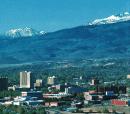
This is the view from my hotel room in Reno, where I'll be staying for the Ca Association of Licensed Investigators conference, less than two weeks away. Want an inexpensive hotel? The El Dorado, connected to the conference site by a walkway, is only $100 for 3 nights. Well reviewed restaurants: Contrada Cafe, White Orchid, Washoe Grill, Peg's Glorified Ham & Eggs (breakfast) and the Pneumatic Grill is for those of us who eat light or vegetarian. Print this extensive list of downtown restaurants.

Thursday, June 09, 2005
~ more ways to play with search engines ~
There's a search industry that feeds off the major search engines, finding different ways to present results from Google and Yahoo searches. DoubleTrust returns weighted inquiry responses, stripping away the overlap links and also showing the unique results from each of the two dominant search engines. It has a very readable graphical presentation.
~ databank of hoaxes ~
At some point you may need to know about a particular hoax. Or is it real? The Museum of Hoaxes has a searchable database. For some odd reason I searched on the term "mushrooms" and out of the seven returned items I selected this one: Are you soon going to need a license to pick wild mushrooms in Illinois?
Wednesday, June 08, 2005
~ alaska public records: denial of access is still free ~
The Alaska Supreme Court ruled that a government agency can't charge the public for the time spent hunting for an exemption to the Public Records Act. No commentary necessary...
alaska-public records
alaska-public records
Tuesday, June 07, 2005
~ a free dob site ~
This site could be better than ZabaSearch for getting a full DOB associated with a name and city, or finding the locale if you know the name and date of birth.
~ personal data isn't what it says ~
The site Privacy Activism released a study on the accuracy of ChoicePoint data.
Surprise: some of the personal identifiers weren't accurate! Private investigators know this because we work with this data all the time. I would never take the information reported in a database as conclusive. How many times do we see multiple DOB's or SSN's listed for the same person? Let me count the ways...or for a good night's sleep, count sheep.
Surprise: some of the personal identifiers weren't accurate! Private investigators know this because we work with this data all the time. I would never take the information reported in a database as conclusive. How many times do we see multiple DOB's or SSN's listed for the same person? Let me count the ways...or for a good night's sleep, count sheep.
The error rate for basic biographical data (name, current address, SSN, phone number, date of birth) was 25% for ChoicePoint and 13% for Acxiom.Oh, this was an analysis of eleven, that's 11, people's profiles.
~ the internet rescues writers ~
My experience tells me that investigators could be better writers and often confuse the meaning of different words. This site will help you sort out homonyms --find out why "my two sense" doesn't make cents.
~ links to all courts online ~
The National Center for State Courts has a well organized list of links to all state trial, appellate and Supreme Courts, tribal and Federal courts, and law related organizations that have a presence on the Internet.
courts
courts
~ florida courts and legislators pursue restriction of personal data ~
Privacy advocates are screaming for legislation to control the dissemination of personal information. What's the downside to imposing limitations on access? ChoicePoint addressed the Florida state Committee on Privacy and Court Records:
ChoicePoint: Omitting personal info from public records could hurt consumers, is here.
Like an alert on a credit report, Rapsheets.com is now notifying the subject of the search, when their information is requested. This could be the most mail that inmates have received. The company now requires a name and DOB to do a search.
UPDATE: July 5: The Chief Justice has granted an extension of time through July 8 for the filing of the final Report.
choicepoint
florida-courts
The draft report and comments are available here. The newspaper article roundup,"We are concerned that the thrust of the... recommendations (go) too far," Lucan wrote. "Quite often, 'confidential' or 'personal' information is the very public data needed to identify the right person: name, current address, date of birth, gender, and eye color."
Omitting such data makes consumers prey to being tagged "with a crime they did not commit, or a foreclosure proceeding, lien or divorce that applies to someone else," Lucan wrote.
ChoicePoint: Omitting personal info from public records could hurt consumers, is here.
Like an alert on a credit report, Rapsheets.com is now notifying the subject of the search, when their information is requested. This could be the most mail that inmates have received. The company now requires a name and DOB to do a search.
UPDATE: July 5: The Chief Justice has granted an extension of time through July 8 for the filing of the final Report.
choicepoint
florida-courts
Monday, June 06, 2005
~ a few more national archive military records are now available ~
The Federal Records Center in St. Louis is making the following military records available to the public:
Navy enlisted men from 1885 until Sept. 8, 1939.
Marine Corps enlisted men from 1906 until 1939.
Read an article
military records
Navy enlisted men from 1885 until Sept. 8, 1939.
Marine Corps enlisted men from 1906 until 1939.
Read an article
military records
~ missouri internet documents threatened ~
A law under consideration in Missouri has County Clerks claiming that they'll have to remove their records from the Internet. A simple requirement to remove identifying information, from Internet-posted documents, on certain state officials, can't be done simply.
missouri-public records
Officials who would be entitled to that protection include statewide officeholders, state legislators, judges, prosecuting attorneys, public defenders, city attorneys and parole officers, among others.
Jackson County’s executive has said the bill would force that county to remove its online public records from the Internet, while Boone County Recorder of Deeds Bettie Johnson has raised similar questions about the measure. The Missouri Press Association has asked Blunt to veto the bill.
missouri-public records
~ another PI, more unauthorized DMV access ~
An article titled, Judge OKs Class Action Against Union in Privacy Protection Suit, wouldn't necessarily lead the reader to explore whether a private investigator was at the root of this class action suit.
In a decision that could change the way some union organizers do business, a federal judge has certified a class action suit under the federal Driver's Privacy Protection Act of 1994 brought by a group of factory workers who claim that a union illegally obtained their home addresses by copying their license plates in the company parking lot.
And how did the union get the DMV address information?
At the Cintas's plant in Emmaus, UNITE organizers recorded the license plate numbers of the vehicles parked in the lot and then gave the numbers to a private investigator who, in turn, hired Pennsylvania Auto License Brokers to access home addresses from state databases.
People, this is a violation of Federal law. If you do illegal acts as part of an investigation that leads to litigation the investigator puts her license, her client's case and the working conditions of all private investigators in jeopardy. And, attorneys, get familiar with the law and don't ask your investigator to break it. In fact, tell them not to.
Sunday, June 05, 2005
~ legislative changes to north dakota's public records law ~
The North Dakota Attorney General offers a brief summary of the 2005 legislative changes to the Open Records law. One of the most significant, restricting one agency from releasing documents generated by another, seems to parallel the same practice in California.
legislation-north dakota
When the law requires a public entity to disclose confidential records to another public entity, the records remain confidential and cannot be released by the receiving entity. Read the annotated Open Records law [pdf]
legislation-north dakota
Friday, June 03, 2005
~ sue to keep your right of access to public records ~
The ACLU filed an Open Records lawsuit against a Rhode Island town for requiring searchers to fill out a form with personal identifiers before getting access. The plaintiff is a realtor who attempted to access the tax assessment database.
Can you spell hysteria???
Update: Apparently, within hours of the lawsuit filing the county withdrew the requirement that requesters submit personal information. Threat. It's a good thing.
public records
The lawsuit states that the records Butterfield sought are clearly public records, and that the open records law specifically provides that public bodies "shall not require written requests for "documents prepared for or readily available to the public." That provision was enacted in order to promote easy access to public records and to protect requesters confidentiality when identifying information was not necessary.
Can you spell hysteria???
Update: Apparently, within hours of the lawsuit filing the county withdrew the requirement that requesters submit personal information. Threat. It's a good thing.
public records
Thursday, June 02, 2005
~ north carolina: Senate passes bills that would modify open records laws ~
The title of a recent amendment to the North Carolina Public Records Act reveals the twisted direction legislatures are taking open government: Protect Confidential Info of Public Agencies. SB 932 bars the publication of any State employees' home or personal cell phone number. Soon you may not even know who's working for you.
north carolina legislature
public records
north carolina legislature
public records
~ Oregon appeals court orders release of police records ~
A Portland newspaper is entitled to see internal police records of the investigation and discipline of an officer who killed an unarmed woman during a traffic stop two years ago, the state Court of Appeals ruled yesterday.
~ Delaware court: Right to privacy ends at death ~
Citing various court cases, including a 1992 Delaware Supreme Court ruling that recognized a common law right to privacy, as well as conflicting Michigan court cases involving autopsy information, Lamb declared that “the overwhelming weight of authority holds that a claim for invasion of privacy cannot be brought by a decedent’s family.”
Wednesday, June 01, 2005
~ find a criminal ~
Go to the end of this post for an important message about nationwide criminal searches.
Private investigators, attorneys and reporters, working in legal and political arenas, are charged with finding out whether their subject has been naughty or nice. If he, (at the most shes are only 12 percent of the incarcerated) has been charged with a crime, how can you find out?
VineLink is a good free source, useful if you know the locale in which to search. To find all the criminal search links that searchsystems lists for California, go to the advanced search page and enter your terms: Match all keywords: criminal; Match any keyword: california; Without keywords: sex (if you don't want to get sex offenders). Link to the free searchable inmate databases that each state maintains. Links to state and county inmate locators are here.
This free database claims to retrieve "Fugitives with Warrants, Missing Persons, Unsolved Crimes, Unidentified Suspects, Criminal Histories".
I know you're tired of hearing about the sex offender databases. Let's face it, not many of the people we're doing criminal checks on fall into this category. Anyway, if this is what you want, search by offender name across all the state sites, in one search.
That's the free stuff. Add a comment if you want to read a posting on low cost criminal databases.
Private investigators, attorneys and reporters, working in legal and political arenas, are charged with finding out whether their subject has been naughty or nice. If he, (at the most shes are only 12 percent of the incarcerated) has been charged with a crime, how can you find out?
VineLink is a good free source, useful if you know the locale in which to search. To find all the criminal search links that searchsystems lists for California, go to the advanced search page and enter your terms: Match all keywords: criminal; Match any keyword: california; Without keywords: sex (if you don't want to get sex offenders). Link to the free searchable inmate databases that each state maintains. Links to state and county inmate locators are here.
This free database claims to retrieve "Fugitives with Warrants, Missing Persons, Unsolved Crimes, Unidentified Suspects, Criminal Histories".
I know you're tired of hearing about the sex offender databases. Let's face it, not many of the people we're doing criminal checks on fall into this category. Anyway, if this is what you want, search by offender name across all the state sites, in one search.
That's the free stuff. Add a comment if you want to read a posting on low cost criminal databases.
~ phone and address databases ~
I was struck today by the jam in which private investigators find ourselves, trying to locate witnesses, heirs or separated family, in the current environment of suspicion that pervades the release of personal identifiers. The dilemma for the public (of which they're mostly not aware) is how to keep away the unwanted advertisers and would be fraudster but still be reachable by the PI ("all loveliness and goodness" we are!), who is bringing good news or money. And the legislatures should make exceptions in all cases of information access for private investigators and attorneys, in order to uphold the smooth and effective functioning of the courts.
I finally reached a woman yesterday who's moved and changed her telephone number a dozen times in the past few years (she's poor, not running from an abuser). I reunited her with her birth child, for whom she had relinquished parental rights 30 years ago. She spent the first 10 minutes on the phone crying with joy that I had found her. This gets to the point of this post. She only had a cell phone, increasingly common, according to the Pew Internet Study. Many data collectors are now able to provide legal, non published and cell phone reverses, mostly from the number to a name or address.
Merlin has a phone break search that is pricey at $10.00 but is free if complete results can't be returned. Both IM411 and SkipSmasher will reverse unlisted /nonpublished numbers, IM411 being the best deal (no monthly fee). Some cell phone numbers are included. These searches are only available for investigations or debt collection by authorized or licensed companies.
I found the name of the owner of a business that was shuttered 20 years ago by running the telephone number through a locator database, limited by state. You can do this type of search through Link to America.
I finally reached a woman yesterday who's moved and changed her telephone number a dozen times in the past few years (she's poor, not running from an abuser). I reunited her with her birth child, for whom she had relinquished parental rights 30 years ago. She spent the first 10 minutes on the phone crying with joy that I had found her. This gets to the point of this post. She only had a cell phone, increasingly common, according to the Pew Internet Study. Many data collectors are now able to provide legal, non published and cell phone reverses, mostly from the number to a name or address.
Merlin has a phone break search that is pricey at $10.00 but is free if complete results can't be returned. Both IM411 and SkipSmasher will reverse unlisted /nonpublished numbers, IM411 being the best deal (no monthly fee). Some cell phone numbers are included. These searches are only available for investigations or debt collection by authorized or licensed companies.
I found the name of the owner of a business that was shuttered 20 years ago by running the telephone number through a locator database, limited by state. You can do this type of search through Link to America.
~ the path to a public record - state archives ~
I often rely on state archives and local historical societies for genealogical and heir research. More of these research projects have landed on my doorstep related to Quiet Title actions. Some of the property ownership information is 100 years old and the living descendants need to be traced. State archives and town or county historical societies have gathered an enormous number of documentary resources, some are posted at their Internet sites, and have in house researchers that can assist you for free or at a very low cost.
The Georgia State Archive, for example, has Ask An Archivist, an email query system for research questions and free lookups in their records.
The Missouri Secretary of State is gradually adding more records to their Cororner's Inquest Database.
Family Tree Magazine has a resource list of the best Internet sites for genealogical research.
You'll want to bookmark the link to this list of state archives and this one for state historical societies.
genealogy
The Georgia State Archive, for example, has Ask An Archivist, an email query system for research questions and free lookups in their records.
The Missouri Secretary of State is gradually adding more records to their Cororner's Inquest Database.
Family Tree Magazine has a resource list of the best Internet sites for genealogical research.
You'll want to bookmark the link to this list of state archives and this one for state historical societies.
genealogy
Subscribe to:
Posts (Atom)

 Posts
Posts


