Tuesday, May 31, 2005

~ find a county ~

Searching for the location of a county but don't know the state? Or maybe you want a list of all the states with a particular county name. Here's where you go.


Sunday, May 29, 2005

~ utah database of cemeteries and burials ~

Searchable database by name of decedent covers 70 percent of Utah's graveyards.


~ identity theft insurance policy ~

It had to be. Probably the only benefit to the low cost ID theft insurance is the compensation for wages lost due to time away from work repairing damaged credit.

~ new hampshire court administration sorts out the public and the private in public records ~

The trial courts in New Hampshire are awaiting a decision by the State Supreme Court before any criminal index information or documents are posted to the Internet. Meanwhile the NH District Federal Court is making all recently filed criminal documents available from the convenience of your computer. Read the article


~ free credit reports are now available in eastern and southern states ~

Make a request online.

~ ingredients in the mind of a terrorist ~

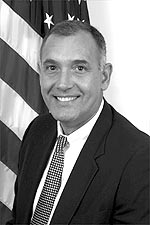
Joe Navarro has a friendly enough face that you could enjoy listening to him for two and a half hours at the upcoming California Association for Licensed Investigators conference, in Reno, June 22-24. Oh, he's also an FBI expert in counterintelligence and counterterrorism, and teaches behavioral analysis and nonverbal communications to law enforcement. His topic for the conference is, The Psycho Pathology of a Terrorist. You know you want to hear this, even if Mr. Navarro's hair is too short.
Navarro has been quoted in news and blogs, where he questioned the abusive interrogation tactics used on some detainees at Guantanamo Bay.
Joe Navarro, a former FBI (news - web sites) interrogator who has taught questioning methods and is familiar with Guantanamo, said treating prisoners poorly makes them more stubborn and unwilling to talk.
"The military has been cavalier in their attitudes toward these individuals to the point that it has been detrimental to the overall mission," Navarro told AP.

He's also a featured writer of many articles in the FBI Law Enforcement Bulletin.

Friday, May 27, 2005

~ quick online sources for vital records documents ~

Public Record Update reports that US Certs joins VitalChek Network as a government authorized provider of birth, death and marriage certificates.

~ illegal sales and purchase of personal financial information ~

The challenges of storing and transmitting personal data are reflected in the recently highlighted spate of data thefts and penetration of computer systems. Data is also being pilfered by bank employees and then, as in this case, being sold to individuals who, in my mind, have a legitimate business need for this information, which is illegal to obtain by pretext.

This fellow, Lembo, posed as a collection agency and got high level bank employees to sell him bank account information at $10 per name.


"Based on forensic examination of Lembo's computers, it was determined that he had employed upper-level bank employees to access and identify individual accounts in their respective banks," the police statement said. "That information was then sold to his clients, which included more than 40 law firms and collection agencies."
Debt collection agencies and, attorneys executing judgments and litigating cases in which a parties' finances are relevant, should be able to independently verify an account holder's assets. But right now that is illegal. The court may award your client a Judgment but the federal government has taken away some of your authority to collect on the debt.

And attorneys can't insulate themselves from prosecution by hiring someone else to secure financial information by pretext. So, don't even ask! It is yet to be seen if New Jersey follows through on this threat but Hackensack PD Captain Lomia is floating it in the press.

Lomia said the law firms that allegedly sought Lembo's services are part of "phase two" of the investigation.

There are a few well informed posts on this topic at Schneier on Security.

~ public access to public records in Pennsylvania ~

The Post-Gazette ran a five-part series on the challenges of obtaining public records in Pennsylvania. I previously posted the first article.


Public Access: Government offices wrongly giving public less access than press

Public Access: Clerks often shut doors to records due to lack of procedures

Public Access: Police logs public in Pa. but many agencies won't provide them

Public Access: District courts follow variety of redaction policies


Wednesday, May 25, 2005

~ Canadian Adverse Drug Reaction Database ~

Searchable database of information on and reports of adverse reactions to pharmaceuticals.

~ one woman campaign to close Internet public records ~

Activist BJ Ostergren is highlighting the availability of politicians' social security numbers to stomp for the removal of government public records from the Internet.

I'm not sure of the basis for her conclusions.

Ostergren sees the solution in more simple terms: Keep public records public, but don't put them online.
"If you want to go snooping in my records, you drive to the courthouse," Ostergren said. Most identity thieves, she reasons, will neither take the time nor want to be seen."

Her approach is a typical grassroots, with a dose of alarmism.

Her formula is simple: Target a county, locate personal data on hundreds of residents, send them letters telling them how much of their personal information is or might be exposed online, and urge them to pressure their local officials.

Monday, May 23, 2005

~ private investigators support measures to protect personal data ~

The nation's largest association for investigation and security services companies (NCISS) has outlined a multipart proposal for Congressional action to protect personal information.

* Data brokers should conduct thorough credentialing of new accounts and those where a review indicates that a new check is in order.

* Congress should ban Internet sales of personal identification information to the general public.

* Penalties, such as fines and jail sentences, for the misuse of personal information should be increased.

* Data providers should be required by federal law to notify consumers when their information has been accessed illegally.

* Congress should prohibit the use of Social Security Numbers on identification documents such as healthcare insurance cards, drivers' licenses and state permits.

* Investigators and other licensed professionals who can demonstrate a need for information and have submitted to a background investigation should have
continued access to personal data.

~ find company name changes ~

Mergers & Acquisitions list of selective companies goes back to 1976.
This M&A Activity page lists CorporateAffiliations.com companies which have merged, changed name, or went out of business.

Sunday, May 22, 2005

~ fact finding on the internet ~

The Future of Information Gathering: Blogs, Search Technology and the Hidden Internet

You guessed it! June 22, Carole Levitt is rewarding CALI conference participants with a jam packed, practical seminar on using the Internet to do your case research.

Carole Levitt is a nationally recognized author and speaker on Internet research. She has over twenty years of extensive experience in the legal field as a Law Librarian, Legal Research and Writing Professor, California Attorney and Internet Trainer. She is a skilled online searcher, focusing on legal, public record, investigative and business research.


Check out the Table of Contents in her book, Fact Finding on the Internet.

~ and did I mention - pretexting? ~


Jimmie Mesis, owner of the widely read PI Magazine, expands on his interview with the FTC on the legalities of using a pretext to gather information, at the California Association of Licensed Investigators conference this June in Reno, Nevada. He'll bring us up to date on the techniques and technologies shaping this aspect of investigative work.

~ Pennsylvania police at odds with the public records law ~

Reporters in a Pennsylvania survey find that 40 percent of police departments decline to release records that are stipulated by law as open to the public.

I previously wrote about similar intransigence in California, Nevada and New York.


Friday, May 20, 2005

~ accoona search engine links to Dun & Bradstreet ~

Accoona search engine adds a business search button that connects you to the company web page and the Dun & Bradstreet Quick Profile. This provides the company contact person, address, sales volume and number of employees.

Thursday, May 19, 2005

~ super charge your business ~


Come to the California Association of Licensed Investigators conference June 22-24 and discover, Marketing Secrets for Private Investigators, presented by our featured speaker, Nader Anise, the nation's leading authority on legal marketing. See what's happening, here.

Wednesday, May 18, 2005

~ aviation accidents database ~

The NTSB searchable database has civil aviation accidents and selected incidents within the United States, from 1962 forward.

~ blogdigger now has local search ~

It looks like Google but blogdigger just indexes blogs. Now it too has a local search. I guess this means you can find weblogs in your hometown that write about pizza.

~ personal data for the taking - societies dilemma ~

The New York Times piece, Personal Data for the Taking: Students Find It's Easy to Find Out a Lot About People, is mostly a less alarmist rehash of the Western world's debate over the extent to which public records should remain open and which records and information should be on the Internet. Students at Johns Hopkins set out to see what personal details they could gather in free sources on the Internet. Rebecca Daugherty, a director at the Reporter's Committee for Freedom of the Press has noted that openness by the government can actually lead to greater security. In the NYT article she names closure of records for what it is: secrecy; and that this should only be invoked in the case of protecting individuals from known threats.

Also cited, former Texas private investigator, David Bloys, now a public records retriever, is behind the push to restrict access to government documents on the Internet. I previously wrote about HB3278 here. Bloys told me that he opposes redacting information from government documents, except when an individual petitions the court because of threats to her or his safety. Bloys contends that a "county exceeds the authority that citizens have given them" when county or state documents are published on the internet. He does not oppose the distribution of index information on the Internet. A problem he noted is that identity thieves are accessing the documents with greater ease and using the government seals or personal signatures to create fraudulent property transfers. Bloys predicts that local governments are ripe for class action lawsuits by those that have had their security compromised.

Those of you in Texas and others interested in the application of biometrics will want to read this bill, but also take a look at the fiscal analysis, which points out that fingerprints would no longer be permitted to be stored in a database! HB3278 states, in part:

Sec. 560.002. DISCLOSURE OF BIOMETRIC IDENTIFIER. A governmental body that possesses a biometric identifier of an individual: (1) may not sell, lease, or otherwise disclose the biometric identifier to another person unless: (A) the individual consents to the disclosure;
(B) the disclosure is required or permitted by a federal statute or by a state statute other than Chapter 552; or (C) the disclosure is made by or to a law enforcement agency for a law enforcement purpose; [and]
(2) shall store, transmit, and protect from disclosure the biometric identifier using reasonable care and in a manner that is the same as or more protective than the manner in which the governmental body stores, transmits, and protects its other confidential information; and (3) may not store a biometric identifier in a database.


Tuesday, May 17, 2005

~ free amber alert on your cell phone ~

Sign up and receive text alerts for your geographical area.

~ delaware must release public information ~

A Federal Court, citing the U.S. Constitution privileges and immunities clause, rules that a states' public records law can't exclude non residents from requesting and receiving state public records.

Resident-only records law ruled unconstitutional
Delaware's rule that only state residents are entitled to use its freedom of
information law violates the U.S. Constitution, a federal court ruled last
week.

UPDATE: The Delaware Attorney General is poised to appeal this decision, according to this news report. The AG's site is mum on the whole matter.

~ ohio felons incarcerated, on probation or parole must provide DNA ~

House Bill 525 will require all Ohio felons to submit their DNA for inclusion in a national crime-fighting database that searches for biological matches between known offenders and evidence from unsolved crimes. Read the AG's press release.


~ florida adds search capabilities to sexual offender database ~

Florida adds a neighborhood search to the Sexual Offenders and Predators online database. Go to the site.

With almost 35,000 registered sex offenders and predators, the FDLE database is one of the largest of its kind in the nation. Over the past 10 years, FDLE has provided a website giving Floridians the ability to search for sex offenders by zip code, county, city or name. As of today, the updated site now includes a user-friendly NeighborhoodTrac search system developed by Pitney Bowes to give parents and others a more targeted search area ranging up to five miles. Pitney Bowes Chairman and CEO Michael Critelli joined Crist and Tunnell at an event unveiling the new system. Read the press release.


Saturday, May 14, 2005

~ Merlin Information hit by a data theft ~

Sadly, merlindata.com, one of the most respected database companies by private investigators, has experienced a theft of personal information, by a customer posing as an investment advisor. Information on almost 9,000 people, 2,700 of whom are Californians was stolen before the theft was identified. The FBI is apparently on the trail of the suspect.

Data thefts, breaches and hacking are becoming routine due to the universal reliance on computer storage and transfer of data. But, unlike ChoicePoint, which kept multiple personal information thefts under wraps, Merlin Information Services has come clean and extended a generous, unique offer, even though there are no identified victims. I gather that the same rouge "businesses" are making the rounds at the various database companies but ChoicePoint hasn't shared its list of known violators, which, undoubtedly, could have prevented this current theft.

"We, of course, immediately apologized," Dores said, and the company fired off a letter this week to those whose personal records were shared. The company also offered those affected a year's worth of credit monitoring at no cost, and bought a $50,000 identity theft insurance policy for each of the 8,998 people."And we set up a hotline they can call if anything suspicious turns up," she said. Read the article and another one here

~ U.S. City Directories ~

Find the repository for U.S. City Directories, those great genealogical tools that are more than a phonebook, more than a reverse directory.

Friday, May 13, 2005

~ keeping personal identifiers off the internet: "When Data Democratization Verges on Privacy Invasion"

Anita Ramasastry writes on the clash of the First Amendment and the need for restricting personal identifiers on the Internet. Ramasastry, an Associate Professor of Law, reflects on the legalities and the dangers of too much freely distributed information, particularly social security numbers, in online sources. She rightly singles out zabasearch, a somewhat scrambled, voyeristic compilation of names, addresses and telephone numbers in one, searchable source.

In short, Ramasastry suggests a few legal avenues.
First, a law could deem certain categories of information off limits. Medical data is already protected, to some extent. Social security numbers should be better protected (for example, from Internet publication).

Second, a law could prevent certain federal, state, and local government data from being accessible online. (Bankruptcy and divorce records come to mind; they could be redacted).

Perhaps private investigators should get out in front of this one and publicly oppose the crass, devil-may-care approach to people's privacy and security exhibited by zabasearch.

The findlaw message board is taking comments. A few are already posted.


~ Louisiana stalking bill exempts private investigators ~

A few months ago I reported on that bad piece of legislation proposed in Louisiana that would turn private investigators into stalkers. HB 51 changes the crime of stalking to"intentional", repeated following of someone. It was passed by the House Commerce Committee with an exemption for Louisiana licensed private investigators, which was not in the original bill. The persistent folks in the Louisiana Private Investigators Association (LPIA) saw this one all the way through. Send them a love letter. Or, better yet, join and contribute funds, because the challenges to our work are not diminishing.

In disapointing news, the Missouri legislature fails, for yet another session, to mandate licensing for private investigators, Ron Rugen reports.


~ satellite photo of a post office box ~


My subject's post office box! Posted by Hello

~ michigan traffic accident reports available online - for a fee ~

Michigan police departments are shedding responsibility for supplying traffic accident reports by contracting with a private company, which can provide these online. The TRACView service will double the fee charged to obtain a report but the public can still get them at the police department, according to this article.

Thursday, May 12, 2005

~ Should public records be sanitized to minimize ID theft? - it's happening! ~

The Republic of Texas is a sniff away from enacting, HB 3278, a measure that will limit personal information available in county records.
It would allow you to have personal information redacted or removed from public documents and would require county clerks to remove personal information from documents turned over to the public and remove public documents from online access.
The problem is that sanitizing all county records and putting them back online, would be too expensive. In Fort Bend County alone, there are some 20 million such records, going back to 1838.
Yah, and health care, quality education and safe neighborhoods cost money too. But it's not really about the cost, it's about the money. Oil, that is. Political oil. Votes. The current tally is in favor of secrecy in the name of protection from identify theft. But once the transparency of government is clouded, there's no getting it back. And what will be redacted from these documents? Birth dates on birth certificates? Names on deeds?

~ fake IDs used to buy homes could further pollute the accuracy of public records ~

This could just be a fabricated, immigrant bashing story but it raises some curious possibilities for corruption of public records. A Denver television station report, Undocumented Immigrants Buying Homes With Fake IDs: Government-Backed Loans Going To Those With Phony Social Security No., claims that some undocumented alien residents are securing fabricated identification for all kinds of nefarious purposes. One of the possibilities, after obtaining a false social security number, then crafting a driver license and a W2, is to purchase real property. Now the public record reflects the name of a property owner who doesn't exist.

Wednesday, May 11, 2005

~ florida - Compliance Stop Work Order Database ~

Florida Compliance Stop Work Order Database is searchable by employer for Worker Compensation violations.

Tuesday, May 10, 2005

~ hawaii sex offender online registry is expanded - are registries creating bigger problems than they solve? ~

Under the new law, the most violent sex offenders are to be listed in the online database for life. For lesser offenses, depending on the severity, an offender would have to wait from 10 to 40 years for removal from the list. Read the article
If everyone can pinpoint the local sex offender registrants, raise a fuss and push them out of a residence in their neighborhood, where do they go? At least if the offender is at a known location the police might be able to better track them, rather than risk loosing contact because of homelessness. In California alone, law enforcement has no current address information for 44 percent of the registered offenders. Read more


~ today's Congressional Hearing on Identity Theft/Data Broker Services ~

View the video of today's Hearing on Identity Theft/Data Broker Services.

Full Committee Hearing
Tuesday, May 10 2005

Witnesses are listed below.
Panel 1:
Mr. Kurt Sanford President & CEO, U.S. Corporate and Federal Government Markets, LexisNexis

Mr. Douglas C. Curling President and Chief Operating Officer, ChoicePoint, Inc.

Panel 2:
Ms. Jennifer Barrett Chief Privacy Officer, Acxiom Corporation

Mr. Paul Kurtz Executive Director, Cyber Security Industry Alliance

Mr. Marc Rotenberg President and Executive Director, Electronic Privacy Information Center

Ms. Mari Frank , Mari Frank, Esq. & Associates


~ new free online records ~

New Mexico State Police Accident Reports
Search by name for reports filed since 2001. There's a small fee to download the actual report.
Arkansas State Police Accident Reports
Search by name for reports filed since 2000. A fee is charged to download the actual report. Not all reports are online. [courtesy of TVC]

Search across all municipal codes online by keywords.


Monday, May 09, 2005

~ data leaks - the evil doer is within - take THAT, Congress ~

InternetNews explores the various data-gone-missing stories, pointing to a bigger problem than rogue company agents stealing personal identifiers.

Congress returned this week to a burgeoning issue likely to concern the financial health of millions of Americans: What can be done about skyrocketing incidents of identity theft and data loss?

According to the Gartner Group, 70 percent of security incidents that occur are inside jobs, making the insider threat arguably the most critical one facing enterprises.
This is no surprise to private investigators who are charged with holding their clients' confidences but ChoicePoint finds it convenient to deflect responsibility for its own poor data security by scapegoating those with whom they do business.

Here's a scenario and prediction. ChoicePoint, the largest commercial aggregator of private information, like any Goliath, doesn't concern itself with its deficiencies. It gets momentarily brought to the ground when trampled by the public, angry about release of sensitive information to criminals. But ChoicePoint must appease its next slayer, the U.S. government, which relies on the private intelligence company in waging war against real or imagined threats. How does ChoicePoint prevent Congress from legislating it out of business? It limits access to its vast database to its (and Congress's) corporate donors and, who else, the U.S. government. And that is just a little part of the creeping information fascism whereby the "for and by the people" have a lock on access to privately collected and government generated records but "the people" don't.


~ a question only a librarian can answer ~

Chat with a government information librarian.

Friday, May 06, 2005

~ your zabasearch update ~

Wired News just posted an interview with Robert Zakari, ZabaSearch president and general counsel, and chairman Nicholas Matzorkis, who claims, "After eight weeks online, ZabaSearch.com beta is processing an estimated three times as many queries as Yahoo People Search on a daily basis." Read the interview

And here's another interview done this week.


~ georgia government employee's addresses stripped from public records ~

The AP newswire reports on a recently enacted law in Georgia that will shield from public inspection public employee's home addresses, telephone numbers and other information. Read the bill


~ Hawaii refuses to release public records, holding that they are confidential ~

The Hawaii attorney general held that collection enforcement orders (demands for money from deadbeat parents) are still public information but won't be divulged due to privacy concerns.

'The records are public, they're just not accessible'

Collection orders that the Child Support Enforcement Agency files publicly at the Hawai'i Bureau of Conveyances against parents who aren't paying child support are confidential records that the CSEA won't disclose to the public, according to the attorney general's office. Read the article


~ Utah changes DMV access law ~

Insurance companies are now going to have to request driver license updates on an individual name basis rather than a daily pooled update of all drivers.
In a ruling that gives additional privacy protection to drivers in Utah, the state Court of Appeals yesterday ruled that companies may no longer obtain the entire driver history database from Utah's department of motor vehicles. Instead, any company that wishes to check the record of a customer may only request information on that specific, individual customer. Read the opinion

~ a reverse directory goes google ~

Some part of the popular InfoUSA phone directory database will be added to the Google Local search. Will it have the full flexibility of the PowerFinder search tool's function that allows the searcher to limit businesses returned by SIC code or within a specific radius?

LOCAL INFORMATION DATABASE COMPANY INFOUSA will license its U.S. business database to Google for use in its local search product, still undergoing beta testing, InfoUSA announced this week. The additional listings likely will add significant comprehensiveness and depth to Google's local offering, said Greg Sterling, an analyst for the Kelsey Group. Short article

~ better than yahoo, better than google ~

YaGoohoo!gle

Wednesday, May 04, 2005

~ could lawyers put in a good word for private investigators? ~

Lawyers are in the D.C. federal appeals court seeking a special exemption to certain privacy provisions in the 1999 Gramm-Leach-Bliley Act, arguing that they are already regulated by the states. The same applies to private investigators, though, to be fair, we're not regulated in every state.


Attorneys: FTC insistence on meeting act's privacy provisions may be hurting clients rather than bolstering their rights

Tuesday, May 03, 2005

~ Internet grab bag ~

I guess we can blame the proliferation of search engines on the success of Google. Maybe these new entrants are bringing something new to search or perhaps the computer taxonomists just have a lot of time on their hands.

OfficialFind takes you to the approved website of the searched company name but gives a list of other possibilities. Snap has a novel approach that works best with getting the searcher to government sites. Term combinations appear as you're typing and a list of sites, with a digest of the content, appears in the main page.

Then there are the innovations to Google made by that site's devotees.

~ market your PI business - information searching on the internet - identity theft - computer forensics - and more ~

Wake me up by 8:30am on June 22nd so I can say a lot about Internet information searching. Oh, I'll be in Reno, Nevada at the California Association of Licensed Investigators (CALI) 38th Annual Conference from June 22 - 24, 2005. The seminar presentations make me salivate. How can you pass up hearing the buzz on the government regulations on pretexting, how to build and promote your PI business (lead by one of the top attorney marketing gurus), and the homicidal teen (presented by the author of Jack and Jill, Why They Kill) ?

Link to the entire program here.

Sunday, May 01, 2005

~ private investigators assist the public with access to personal information - listen to the NPR report: Private Eyes Cramped by Privacy Breach ~

Larry Abramson has a report today on the NPR radio program, All Things Considered, that features interviews with several investigators (including me) highlighting the detrimental effect on the public of the new policy implemented by Choicepoint that masks portions of social security numbers, driver licenses and dates of birth.

In the weeks after they announced major security breaches, data brokers like ChoicePoint and Lexis-Nexis have imposed restrictions on access to Americans' personal information. Some of their clients are no longer allowed access to social security and drivers license numbers. NPR's Larry Abramson reports on the affects this has had on private investigators, who have come to rely on personal data to solve cases. Listen to the story