Wednesday, August 31, 2005

~ intelligence, terrorism and the loss of public records ~

State agencies that manage vital records, driver licenses and other documents with personal identifiers are starting to implement new procedures for handling and releasing these documents, in accordance with the requirements of S. 2845, the Intelligence Reform and Terrorism Prevention Act of 2004 (Public Law 108-458).

This article in the Muscatine Journal, Iowa suggests that agencies, promulgating uniform standards in order to receive federal money, may make access to vital records by genealogists, journalists and other unrelated parties more difficult.
Gray said they were told that access to birth and death records will be limited to family members who have a legal reason to see the records. After Jan. 1, 2007, the records will be off limits to the public and media. It's not clear yet whether other exceptions will be made as some details of the law have not been finalized.
H.R. 418 REAL ID Act of 2005 will add another element to this law requiring state employees pass background screening.

Tuesday, August 30, 2005

~ the legal status of telephone toll records acquisition ~

The Electronic Privacy Information Center (EPIC) has sent the Federal Trade Commission (FTC) an addendum to their earlier request that the FTC investigate information brokers who are selling telephone toll records through the Internet. The new and refreshing element in this EPIC missive is the positive nod to professional investigators. Much of the credit goes to the National Council for Investigative and Security Services (NCISS) and California's own Francie Koehler:
[A]n Oakland, Calif. private investigator said it's a dangerous practice for PIs to take clients over the Internet. "Any time you provide information to another individual, you need to know who they are," said Francie Koehler, a member of the California Association of Licensed Investigators. "That's the part people working over the Internet miss. They don't know their client."
Unlike their earlier petition requesting the FTC to impose more stringent rulemaking on the release of proprietary customer information, in which EPIC slammed investigators, the update distinguished the fly-by-night, quick-buck "investigator" from those who work within the law. This is a welcomed shift in attitude and may lay some foundation for a constructive relationship.

On a negative note, a former PI fuels the fire, telling ABC News just how information brokers gather sensitive personal information, including telephone call records.

Monday, August 29, 2005

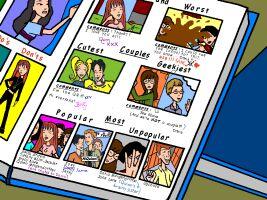
~ find a school yearbook ~


Investigators know where to go to get our hands on a particular school yearbook. Sometimes they're found at the school or the local library. But don't discount state libraries and archives, and state and local historical societies in your search. For example, the Nevada State Historical Society posts a list of the school yearbooks it retains on site. The librarians in these organizations usually know their collections quite well and are enormously helpful. When I've needed more indepth research at a particular institution, I've become a member (the fee is minimal) and received hundreds of dollars worth of essential research.

~ interviewing tools ~

Criminal defense investigators have much to be critical of in the approach to interviewing advocated in "the Reid method", the basis for police interrogations. But all interviewers may find some valuable techniques in their monthly investigative tips.

~ some education on the california public records act ~

The Contra Costa Times (free registration - use: bugmenot.com) provides a simple rundown of the steps to follow when making a California Public Records Act Request. They also refer the reader to a few of my favorite First Amendment organizations. The one negative note with which I disagree concerns the redress available to the requester should the CPRA request be denied. For a fairly low cost this can be litigated, and there are many organizations which are experienced in this area.

If you've ever made a CPRA request to the San Jose (California) Police Department you've discovered that they charge a steep fee for what amounts to research time costs, passed onto the requester. This is a direct violation of the CPRA provision that permits agencies to charge only for copying costs. But no one's sued them...yet.

Saturday, August 27, 2005

~ once again - there is no national criminal history database ~


The FBI will check fingerprints for matches in their crime information database, a national source for criminal histories. Some states now require nursing homes to submit fingerprints of new hires to the FBI for a criminal background check. Could this promote a false sense that the FBI criminal history search is a complete nationwide repository for criminal information?

The study, conducted by Craig N. Winston, an assistant professor of criminal justice at Sonoma State University, found that the FBI data lacks proper identifiers to credibly link a criminal hit with the subject of the investigation.

Another finding was the large number of missed records and false positives generated. For example, when analyzing a sampling of 93,274 background checks in the state of Florida, Winston's search revealed that the database missed 11.7 percent of the criminal records it should have identified. Even worse -of the more than 10,000 criminal records found, 5.5 percent of them were falsely attributed to those who were not convicted of a crime. Read the study

~ free searchable database of police reports ~

Not many of us have need to obtain police reports from Hamilton, Butler County, Ohio but maybe this town will become a trend setter! The Hamilton Police Department website provides online access to a database of reports, searchable by individual name. Then download the actual police report.

Friday, August 26, 2005

~ missouri counties defend access to public records ~

Jackson County, Missouri is suing the state over a new law about to take affect that would be so costly to implement that the county would have to remove all public records from its website.

The new law prohibits governments from publishing any personal information about elected or appointed officials on the Internet without their written permission. It goes into effect Sunday.

Jackson County joined Boone, Cass and Platte counties to seek an injunction against the law, believing it violates the Missouri Constitution. Read the article

Missouri private investigators, attorneys and public record researchers should get on the horn to their legislators, argue the case for repeal of this preferential law, then contact the counties that are standing up in defense of public access and cheer them on.

Thursday, August 25, 2005

~ missouri attorney general adds charities online ~


The Missouri Attorney General has a charities lookup on its website. The details are skimpy and not nearly as extensive as the California AG site for finding federally approved, state registered charities and charity fundraisers. California also provides the pdf for all recent IRS Form 990's, which is where you'll gather the financial details and the list of highest paid employees, and the Directors. Unfortunately, none of the other online databases that track charities enable searching within the 990's, which would be very helpful in looking for individual names. There are a number of sources that provide a free national database of charities: GuideStar, CharityNavigator and the BBB Wise Giving Alliance are a few.

Wednesday, August 24, 2005

~ everybody - get a red hot mug shot ~


Mug shots of defendants in federal cases are public records, not just available through discovery, according to the Sixth Circuit, refuting the directive issued to the U.S. Marshals Service by its general counsel to release photos only to aid capture of fugitives. This ruling will immediately affect the states within the Sixth Circuit: Kentucky, Ohio, Michigan and Tennessee. Read the article

Tuesday, August 23, 2005

~ when is a school district record not public? ~

The Tennessee Court of Appeals affirmed a lower court ruling that data on school district computers may not be a public record, which would have to be determined on a case by case basis. Evan Brown discusses this case and provides the links.

~ technology that interferes with snooping ~

The days of slipping unnoticed into a school to interview a teacher or student may become a distant memory if personal identification technology expands beyond this Florida district.
The Collier County Public School District has selected GVI Security to provide the the school district with an "enterprise-wide visitor ID verification and access management system to control access of visitors, vendors, and volunteers to its school facilities," GVI Security said in a news release.

Monday, August 22, 2005

~ photos mapping a street near you ~


Amazon has a new angle on mapping and spacial imaging, available at A9.com. Unlike the aerial satellite photographs available through Google, A9 is collecting street level views, from the human perspective. A handful of cities, and those are only partially covered, have images available. But you might get lucky and find a snapshot of just the storefront you need.

Saturday, August 20, 2005

~ find a trucking company ~

Search for trucking companies by company name, location or owner/operator to get address, telephone number, email or owner names within a specific locale.

Thursday, August 18, 2005

~ florida applies redacting software to court filings ~

This Florida county is the first in the state to apply a computer software program to redact personal identifiers from newly filed documents, in preparation for possible reposting on the Internet. County websites no longer display court records, pending a decision from the Florida Supreme Court on electronic access.

~ missouri legislators reconsider their place in the public record ~

A new law in Missouri requires any government agency posting personal information on the Internet to first obtain permission from elected and appointed officials before making their addresses available. But when this public information is available on everyone else, it's a bit of a stretch to expect the public to accede to this double standard. Apparently someone got the message to the legislators. Read the article
Officials with cities and counties statewide expressed concerns about the bill as soon as it passed. Because there could be thousands of "elected or appointed" officials in Missouri, it would be impossible to comply with the law without taking down Web sites for county land records and property tax data, local officials said.

Wednesday, August 17, 2005

~ more government employees may be removed from public records ~

California SB 506 will add an additional group of public officials to the roster of those whose personal data is confidential. Keep this idea filed in the back of your hat. When subject to a potential threat, various government employees may apply to have their address and other identifiers removed from public records. In its current form, SB 506 deems the application for closure a public record. If the document exists, you'll know that the subject has convinced another public official that "a life threatening circumstance" exists that impels the request for confidentiality.

This bill would require a local elections official to extend this confidentiality of voter registration information to specified public safety officials, upon application, as specified, for a period of no more than two years, if the local elections official is authorized to do so by his or her county board of supervisors. The application of a public safety official would be a public record.

~ california attorney general is presented with more questions about public records access ~

California Attorney General Bill Lockyer is seeking comments on several questions that have been submitted for opinions regarding access to public records. One query, from Assembly Member Jay La Suer (R-La Mesa), implies that some politicians view journalists as lower life forms:
With respect to a request for the address of an individual arrested by a law enforcement agency, where the requester declares under penalty of perjury that the request is made for a journalistic purpose (Gov. Code section 6254, subd. (f)(3)), may the agency require that the requester present subscriber lists, distribution lists, copies of past publications, proof of membership in a press trade association, display a press identification permit issued by a California law enforcement agency, or qualify as a journalist in a judicial action (e.g., Evid. Code section 1070, Gov. Code sections 6020-6027?
And turn your pockets inside out while you're at it!

~ find variations of last names ~

I do a fair amount of genealogical research related to tracing principals in long defunct companies or building family trees for real state quite title matters. Surname spellings vary quite a bit, especially in old or handwritten records. Then there's the familiar situation that your client only has a phonetic spelling. You might start your search for last name variations at this site, which provides lists of names organized alphabetically.

Tuesday, August 16, 2005

~ florida supreme court releases long awaited report on access to court public records ~

The Florida Supreme Court Committee on Privacy and Court Records just released its complete report on recommendations for balancing the requirements of open records with the more recent demand for greater privacy of personal information. Read the full report or go to this pdf of the section on public access to electronic records. Or, grab a quick bite.

~ find a michigan cemetery ~

Refer to this site to identify Michigan cemeteries by county and then lookup a corresponding list of grave transcriptions.

Monday, August 15, 2005

~ georgia air traffic logs are public record ~

Records about the aircraft flying in and out of an Atlanta airport cannot be kept secret under the state's open records law, a judge ruled. Read the article

Sunday, August 14, 2005

~ research political affiliations ~

Identify donors and recipients related to political contributions under IRS Code Section 527, covering non profit entities. Draw connections between individuals, political organizations and non profits through this database maintained by the Center for Public Integrity.
A 527 is a non-profit organization formed under Section 527 of the Internal Revenue Code, which grants tax-exempt status to political committees at the national, state and local level. Over the past several years, the term has come to refer to a new form of political organization operating in a gray area of the law. These groups actively influence elections and policy debates at all levels of government, but do not advocate explicitly for election or defeat of candidates. For this document, the definition of "527 organization" is a political committee that files its most complete set of reports with the Internal Revenue Service, not with the Federal Election Commission or its
counterparts in the states.

~ north dakota implements changes to public records law ~

North Dakota is specifying fee charges for public records copies and exempting records deemed confidential. Read the list Read the Attorney General's 6 page opinion on release of police records.

~ autopsy photos are exempt from north carolina's public records act ~

The North Carolina state Senate has passed a law removing autopsy photos and recordings from public access.
State or local medical examiners could provide copies of autopsy photos and video and audio recordings largely only to court officers, police and the dead person's family. A physician, for example, could copy the photos and other recordings to provide expert witness to a media outlet about the death, as long as the copies aren't revealed. Read the article

Saturday, August 13, 2005

~ indiana voter registration records ~

Access to Internet-based Indiana voter registration records was eliminated, as was the onsite computer terminal, until it was reconfigured to remove personal information. Full access to a voter affidavit requires the requester to sign a statement that she will refrain from sharing the information with a third party. Read the article

~ private investigators are blogging ~

I'm pleased to see that a few of my fellow private investigators are leaping into the blogging realm and talking on topic! Donna Snelling, a Portland, Oregon PI is covering newsworthy topics on the subject of surveillance and background screening, at All Private Investigator Background Check News, an unwieldy title. The Licensed Private Detectives Association of Massachusett's, Inc (LPDAM) are blogging at a site by the same name on themes of general interest to PI's.

Friday, August 12, 2005

~ oregon police disability records fall under public records provision ~

The personnel records of police and firefighters in Oregon are a public record, according to a recent decision.

In this case, a Multnomah County circuit court ruled that The Oregonian has the right to see the names of city police officers and firefighters who are on disability, how much they are being paid and whether they have reported receiving outside income, which could reduce their disability payments. Read the article

~ new york state data breach notification signed into law ~

New York has joined the collection of a minority of states that have recently passed consumer notification requirements for companies retaining customer personal information that is compromised. The law applies to all size companies doing business with New York, not just those domiciled here. Read the article

Wednesday, August 10, 2005

~ Pennsylvania restricts search of real property records ~

A number of counties around the U.S. remove names from their online real property databases or, in this case, remove the option of searching by name unless a password is obtained. The reason cited for the new procedure is, of course, "privacy", which one doesn't have in public records. But in this instance the searcher is asked to give up her anonymity, just in case the request comes from say...a penitentiary (which WAS cited by the county). I didn't know that inmates had computers.

Tuesday, August 09, 2005

~ changes afoot in criminal offender information ~

The Intelligence Report and Terrorism Prevention Act of 2004 requires the Attorney General to recommend ways of standardizing criminal record information. The Privacy Rights Clearinghouse submitted its comments to the AG and posted it at their website. They cogently point out that there are real consequences for people who can't get jobs because of inaccuracies in criminal offender records. Primarily those sources cited are private databases, not the government records. Anyone doing background screening will want to take a look at the PRC letter.

~ south carolina death index ~

South Carolina index of deaths from 1915-1949 is searchable at this genealogy site, or you can snag the plugin at the state website and perform the search there. The genealogy site only provides a limited amount of free information. If you want to do more than one name, go to the government site.

~ no improvement ahead on california property records online ~

San Bernardino County seems to have dedicated itself to the policy of restricting the dissemination of public records to the full extent allowable by law. The 1998 change to the California Public Records Act, specifying the government employees whose addresses could not be published in public records on the Internet, has been applied by San Bernardino to its real property database. All names are excluded because, as other entities also claim, they can't effectively ensure that the required ones are identified. And the law doesn't require it. Unfortunately, the county is applying "sound legal reasoning". It's just miserable public policy. Read the article

Sunday, August 07, 2005

~ horse ownership databases ~

When you're doing asset research have you considered checking the horse ownership databases? This may only be a consideration if your subject is in a rural area and you have reason to think that he or she owns a purebred horse. But for an average daily fee of $10 you can search by owner name, sometimes just by geographical region, and find the names of the horses, when they were bought or sold and from whom they were bought. View the Arabian Horse DataSource Demo

~ find a funeral home ~

A list of funeral homes organized by state, then city, returns funeral home name, address and telephone number.

Saturday, August 06, 2005

~ illinois death index ~

An Illinois statewide index of deaths from 1916-1950 is available at the website of the Secretary of State.

Friday, August 05, 2005

~ foia request for appointment calendars denied ~

On the theme of parsing the private from the public in records held by a government agency, a federal district judge determined that appointment calendars at the U.S. Department of Agriculture were not public records. The basis of the decision was that the schedules listed both professional and personal appointments and that the agency did not require them to be maintained. Read the article

Thursday, August 04, 2005

~ chandler, arizona crash reports ~

Chandler, Arizona has been added to the short list of police agencies that sell accident reports online. They distribute the reports through a private company, which lists the other municipalities, all in the Midwest or eastern U.S.

Wednesday, August 03, 2005

~ free online old city directories ~

I just love these old city directories. They listed a person's name and their work title, reminding us of the days when people stayed in one job their whole lives, or had a job! Only a small sampling of geographical regions are online, many from the 19th century, but here are sites of some freely available, including the 1922 San Francisco directory. I previously linked to the list of repositories of hard copy directories.

~ privacy conference in virginia ~

If you're in the Williamsburg, Virginia area October 20th and 21st, 2005 attend the Conference on Privacy and Public Access to Court Records, at William and Mary Law School.

Monday, August 01, 2005

~ caddo parish louisiana - online marriage index ~

One Louisiana parish turns a formerly fee-based online marriage index into a free service. Read the article